



Safe Space (2024)
Dystopian sound Installation, created in collaboration with Juliette Collas

Urban remodelling and gentrification redistribute bodies in space in the name of security and modernity. “Antisocial” behaviours are deterred often by light and sound systems, such as high pitch tones to ban younger bodies or blue color lights to discourage drug usage.
Installed in the depths of the Kunsthaus parking space, Safe Space questions the (im)possibilities to define such a concept. Created as a sound installation for the Dystopia Festival 2024 , it explores the tensions between comfort, safety and autonomy. How do our bodies encounter the city? Where and who can find shelter in the cracks?


The installation is composed of 8 lights, 8 loudspeakers and 3 ultrasonic sensors placed in a grid and steered by microcontrollers. The audience can trigger and change the installation’s behaviour by walking under the grid:
The passive state occurs when none of the sensors are activated. The harmonious choir fills the space with resonant tones and bright, randomized light, for serenity and balance. However, this calm facade is artificial: fragile and resistant to disruption, it leaves no room for dissonant voices or hidden corners.
In contrast, the active state is triggered by one or more ultrasonic sensors. Here, the choir’s sounds distorts into an endless feedback cycle as the lights extinguish, casting the space into ambiguity and unpredictability. This environment, while darker and dissonant, offers a safe space—one that embraces contradiction, darkness, and autonomy.
Accusation in a Mirror (2024)
Dangerous Vibrations
Accusation in a Mirror (AiM) is the act of accusing an enemy of the very crimes or intentions that the accuser is planning, a method that creates justification for preemptive violence and manipulates public perception. Used in genocides such as the Holocaust and Rwanda, it weaponizes language, transforming rhetoric into a tool of destruction. In legal terms, AiM plays a key role in demonstrating intent, or dolus specialis, an essential element of genocide under the Genocide Convention. By publicly accusing victims of being a threat, perpetrators both inflame public sentiment and justify their actions. AiM is not just rhetoric—it is a deliberate step toward atrocity.

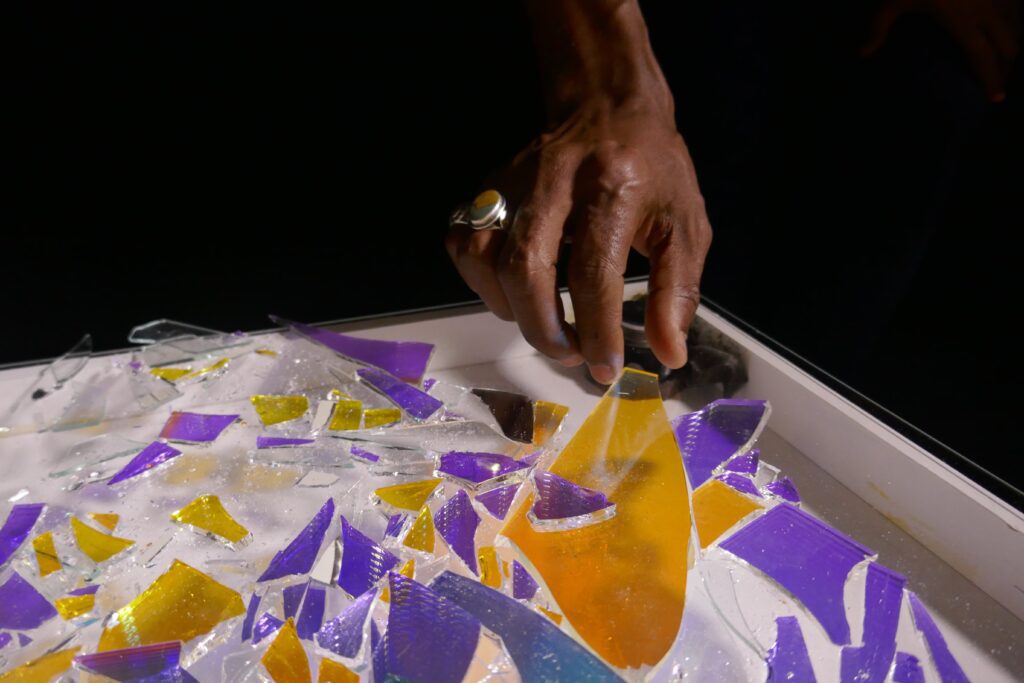
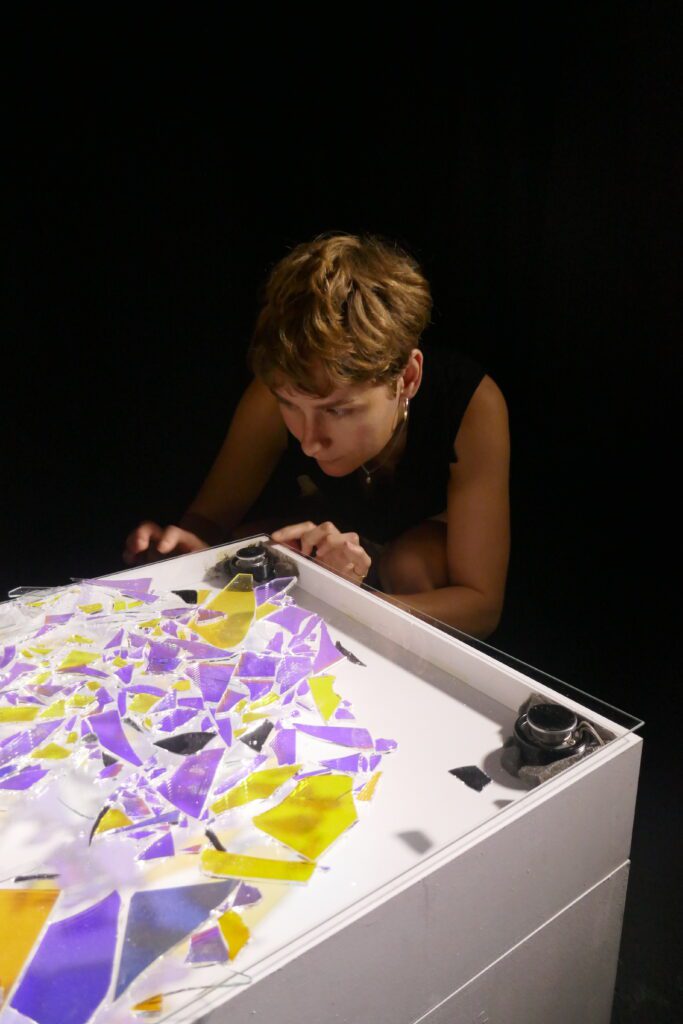
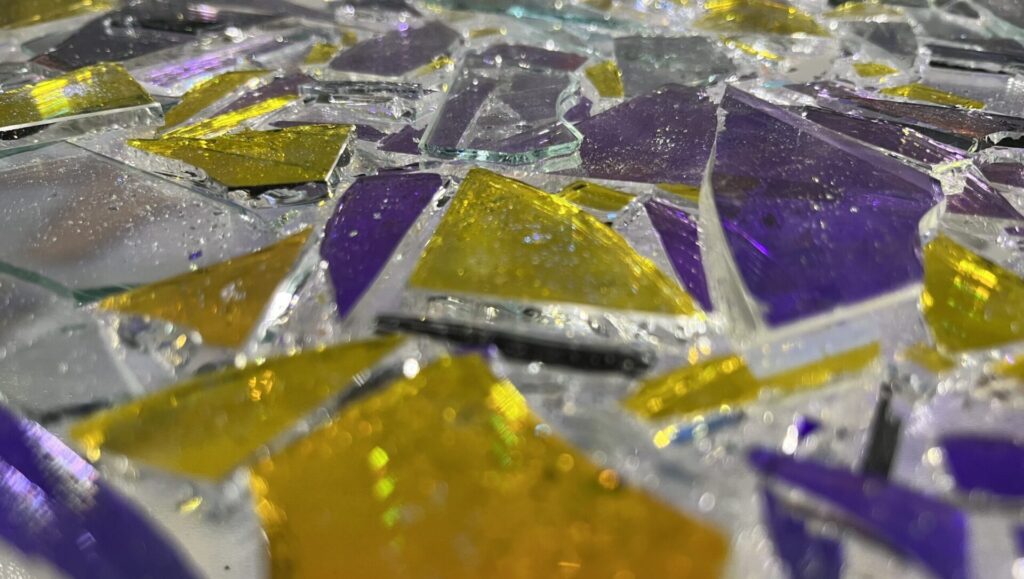
AiM as a multichannel sound installation is a research project created for Rundgang 2024. The installation features transducers mounted on a wooden structure, which play back rhythmic, processed recordings of historical hate speeches. The sound echoes like a machine gun, with words transformed into a relentless, mechanical rhythm of violence. The wooden structure integrates dichroic glass, which shifts color depending on the angle of view, symbolizing the distortion of truth and the changing perspectives that propaganda can create.
The glass surfaces vibrate in response to sound, causing shards to fall on the floor over time and gradually crossing the boundaries of the sculpture. Over time, the broken glass transforms the space into a hazardous zone and echo the real-world consequences of weaponized language. Visitors are invited to move through the installation carefully, encountering both the reflective surfaces of the structure and the fractured, broken glass beneath their feet. The rhythmic sound, paired with the physical fragility and transformation of the space, creates an environment where the dangers of propaganda are rendered immediate and unavoidable.
Secretion (2023)
Singing fountain of bodily fluids.
Can it be that in the West, in our time, the female body (sigh) has been constructed not only as a lack or absence but with more complexity, as a leaking, uncontrollable, seeping liquid; as formless flow; as viscosity, entrapping, secreting; as lacking not so much or simply the phallus but self-containment—not a cracked or porous vessel, like a leaking ship, but a formlessness that engulfs all form, a disorder that threatens all order?
Grosz, E. Volatile Bodies : toward a Corporeal Feminism. Bloomington (Indiana University Press, 1994), 203.

Mixing fluid choreography, haptics and multichannel composition, Secretion is a sound installation taking the form of a slime fountain. Inspired by the Versailles baroque water features of the 18th century, it explores our relation to menstrual bloods and body fluids. Away from flamboyant representations of Man’s power on nature, it tackles menstruation with a materialistic and genderless approach.

Through a vocal soundtrack synchronized with the water pumps, Secretion invites visitors to imagine the liquid as its own creature. Words initially understandable lose intelligibility and evolve as its own slimy entity. The slime, composed of sodium alginate (a natural brown seaweed extract) becomes stickier and darker with time, falling back from the pumps, re-creating its own very soundscape each cycle.
Due to the very nature of water, spillage of it around the fountain is inevitable. It splashes the visitors, ends up on the floor, the fabric, or evaporates, reshaping the sculpture through time. The abject and monstrous already present in us to become unavoidable and fascinating when erupting in the room. Visitors are invited to drift away from the usual connotations of menstrual blood and embrace it all: sounds, smells, texture…
Secretion act as a permanent exchange of molecules, an invitation to consider other scales of organisms, other realities, other materialities.
The installation is directly draws from the theories of Astrida Neimanis on hydrofeminism. It addresses the intertwinement of our own biological waters with planetary fluids. De-centering ourselves as humans, we can embrace our raw materiality as part of an entire ecosystem.
These varied speeds and slownesses, multiple movements, and diverse incorporations of ‘water’ belie the difficulty of speaking of water in the abstract – as though it were one undifferentiated and amorphous thing, the same everywhere and all the time. But, undeniably, this is all water. We are all bodies of water. In fact, paying attention to hydrological cycles presents a rather queer notion: water is evidently both finite and inexhaustible; both the same and always becoming different, too.
Neimanis, A. Bodies of Water: Posthuman Feminist Phenomenology. (London: Bloomsbury Academic, 2016), 46


stereo version of the 4.1 soundtrack
Grosz, E. Volatile Bodies : toward a Corporeal Feminism. Bloomington (Indiana University Press, 1994).
Neimanis, A. Bodies of Water: Posthuman Feminist Phenomenology. (London: Bloomsbury Academic, 2016).
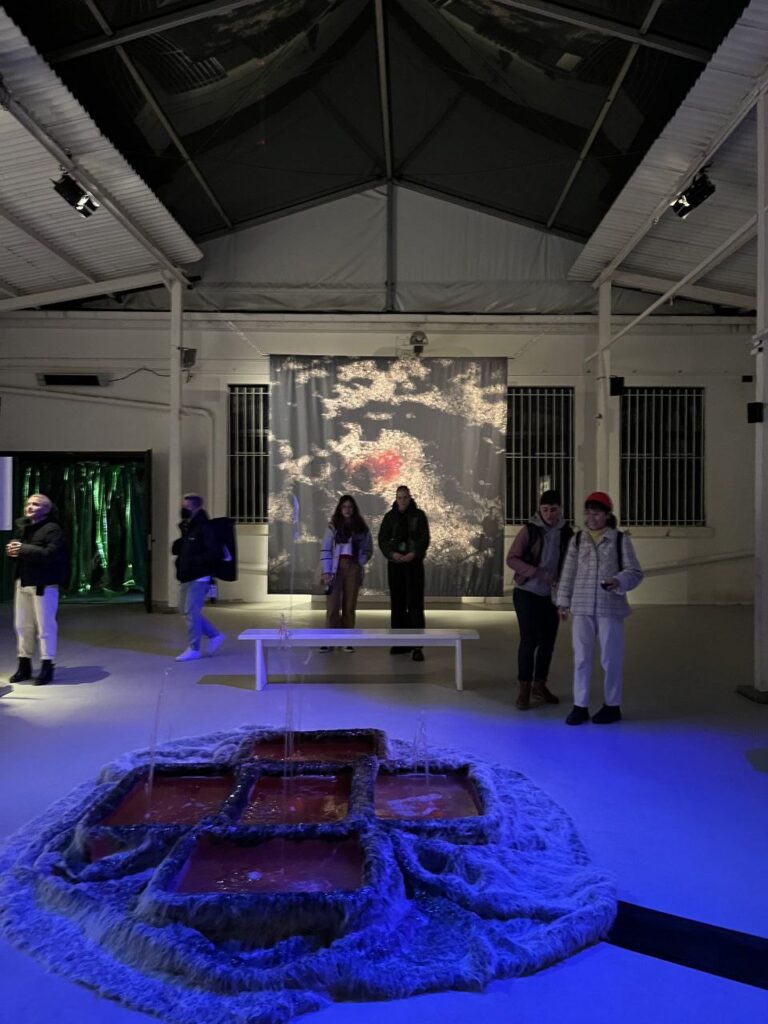

Secretion was presented at the Menstrualities exhibition at Alte Munze, Berlin.
Cybernetic Booth (2022)
Failure of the cybernetics
Design by Siwei Cai & Nikolai Korypaev . Sound by Salomé Lubczanski & Makoto Oshiro.
From the life and work of Walter Hollerer, marked by a fascist history, emerged a concept of cybernetics. This concept explores the interactions between living organisms and machines, in interdisciplinary and complex systems. By exploring feedback loops and control mechanisms, systems search to understand and improve themselves.
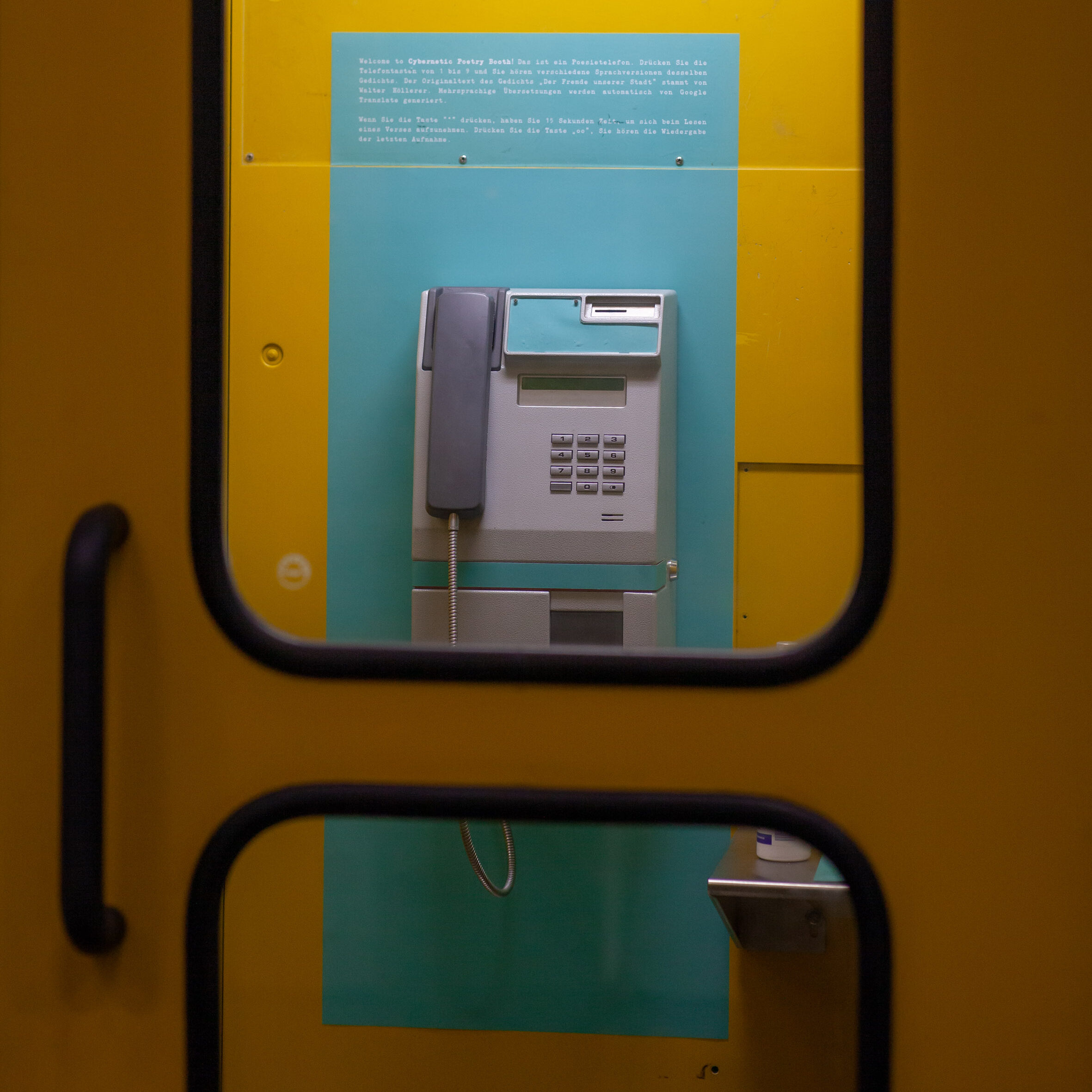
The Cybernetic booth installation reveals the power of machines and transmission technologies to obstruct and distort communication, leading to the impossibility of mutual understanding.

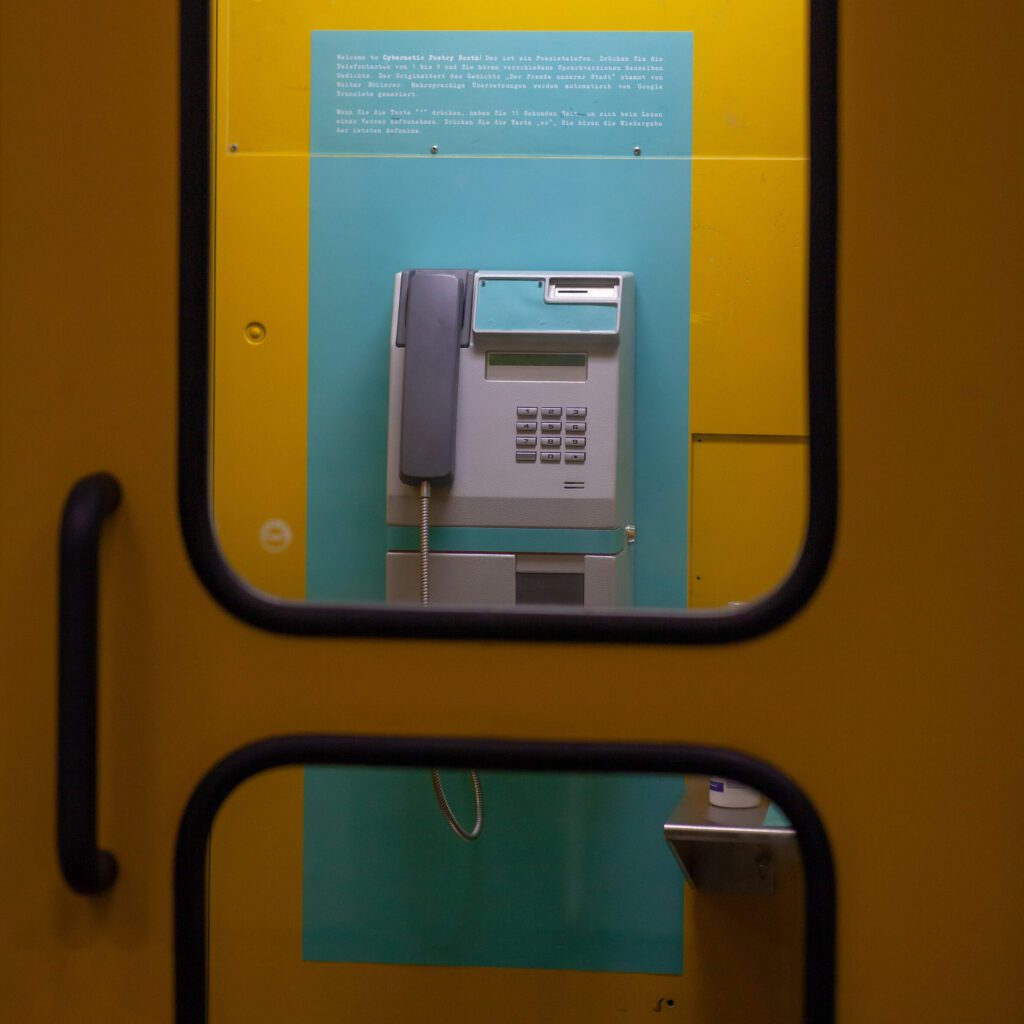
In this particular instalation, visitors are welcomed by a cacophony of fragmented voices, falling silent when the phone receiver is picked up, as to premeditate the failure of the machine. Each press of the phone’s keypad is programmed to play a rendition of the Hollerer’s poem Der Fremde unserer Stadt (1958) in a different language. The text loses its original meaning, subject to multiple translations in a feedback loop. The translation cycle defeats its own purpose and reveals a collection of nonsentences. As the sentences drift away from intelligibility, the listener is left only with the sonic and textural qualities of words. Here, the device becomes obstacle to clear communication and mutual understanding.
The Cybernetic Booth serves as a reminder of the invisible dangers inherent in unchecked technological progress, and the potential for manipulation and control. By subverting Hollerer’s utopian vision of cybernetics, the installation prompts reflection on the complexities of human interaction and the ethical implications of technological advancement.
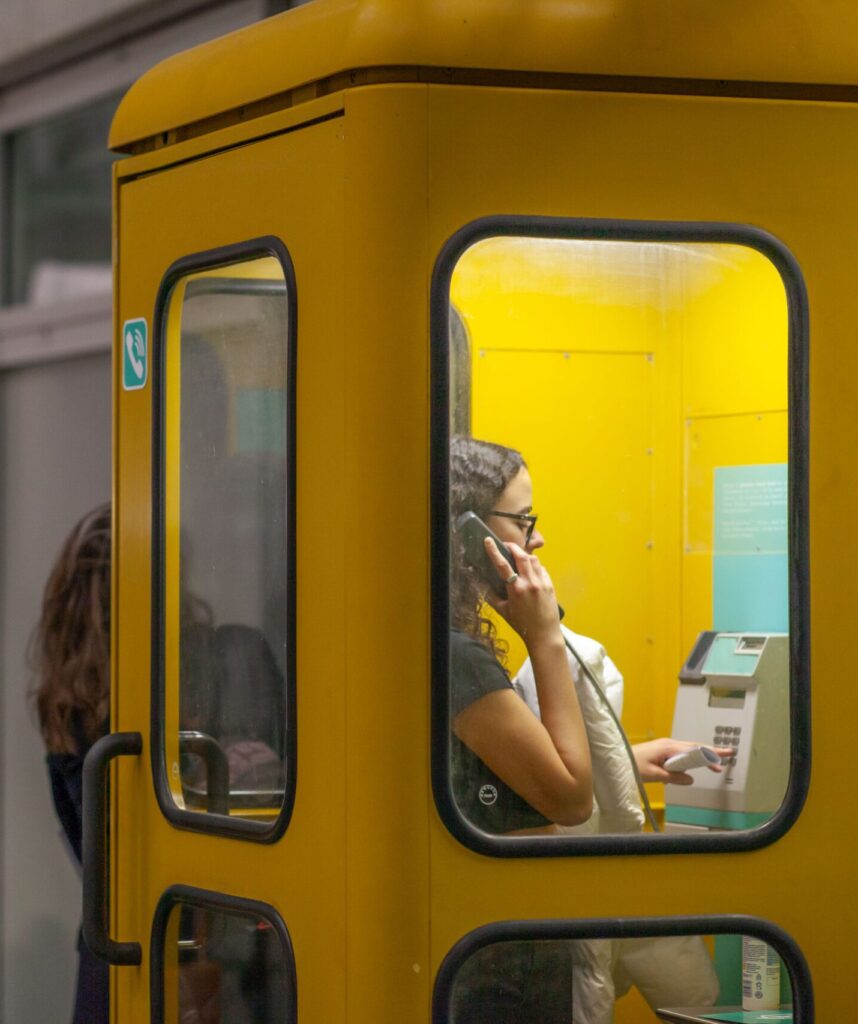


All photo by © Christian Kielmann, www.herr-kielmann.de
The Cybernetic Booth was presented In the Volkswagen Universitätsbibliothek in Berlin for the collective exhibition Sprache im technischen Zeitalter, a cooperation of UdK’s Sound Studies and Sonic Art Program with the TU Stage Design Master’s program, and the TU Litterature Studies program.
Durstig (2022)
Multi-sonic window for a Mensch-made landscape.

The Klanglandschaften Festival is organised on the Holbrechter Riesenfelder, where used waters from Berlin were transported and cleaned from 1871 till 1985. While treated waters were initially re-used for local agricultural production, the growing industrialisation brought increasingly polluted waters. Today many heavy metals, anionic agents and hydrocarbons are laying invisible in the grounds, leaving the place as a research laboratory for landscaping and forest development.
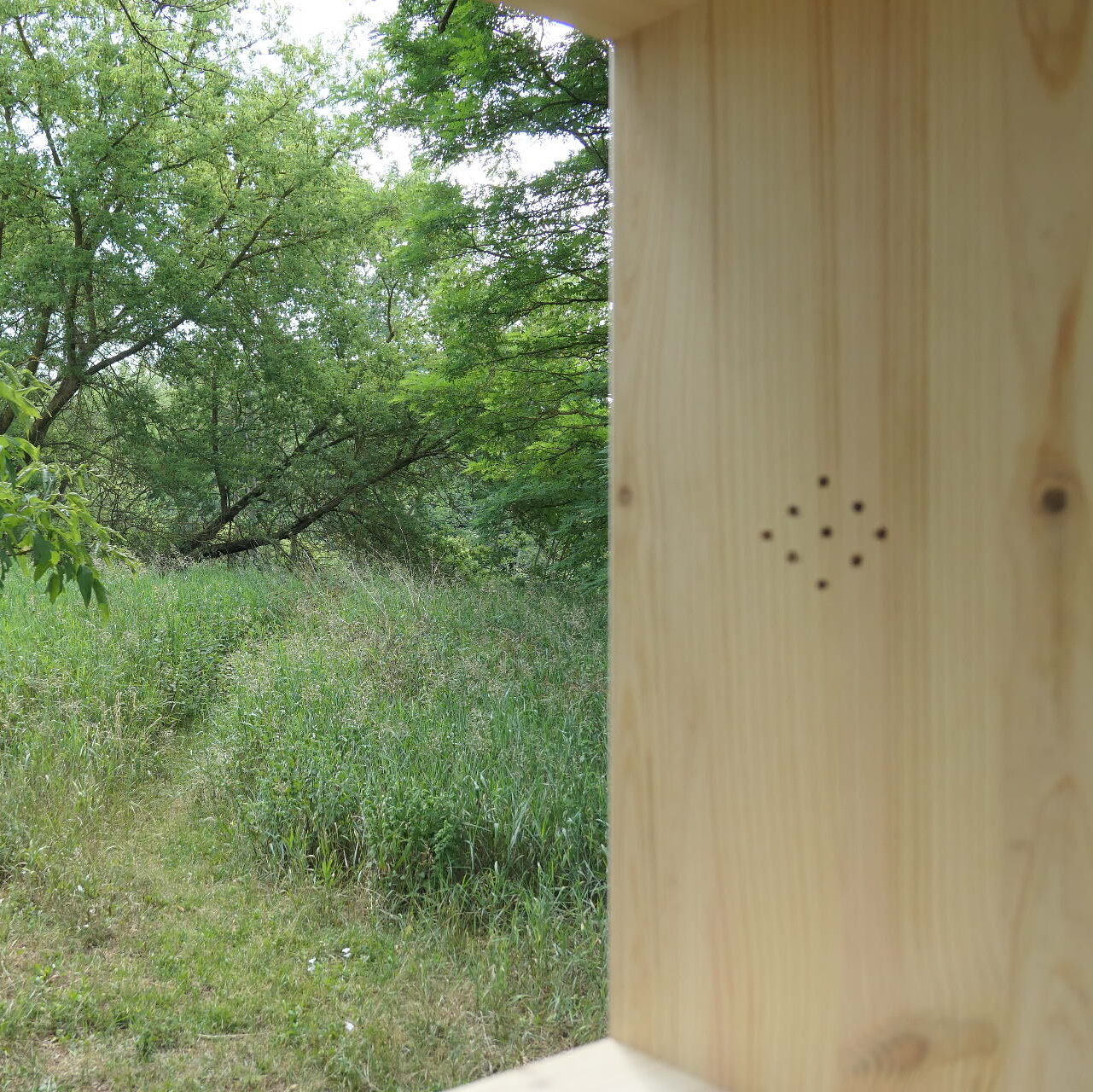
To raise awareness on water pollution and human intervention, Durstig is built as a sonic window. The visitor can touch, look and hear through the human curated nature while having a glimpse at the unseen. Each side of the window plays a different arrangement of underwater recordings and algorithmic composition based on the heavy metals present in the ground.
Durstig hangs from a maple tree next to a pond, planted especially to reduce the spread of polluted waters. Acting as a gatekeeper, the tree uses the neighbouring water for its growth and keeps it from streaming further.


video by © Jan Thoben
Thristy was installed at the Klanglandschaften Festival (2022) in the Holbrechtfelder, Brandenburg.
Hey Bitch ! (2021)
Vibrating chair to upcycle cat calling.

Following Henry Lefebvre’s ideas, urban space is not simply an inanimate place filled by people. It is conceived, perceived and lived, therefore dependent from social dynamics and political contexts. Who does the city belong to? Who is free to walk the streets? Today, city soundscapes feature endless street harassment. It targets physical bodies and resonates in mental spaces.
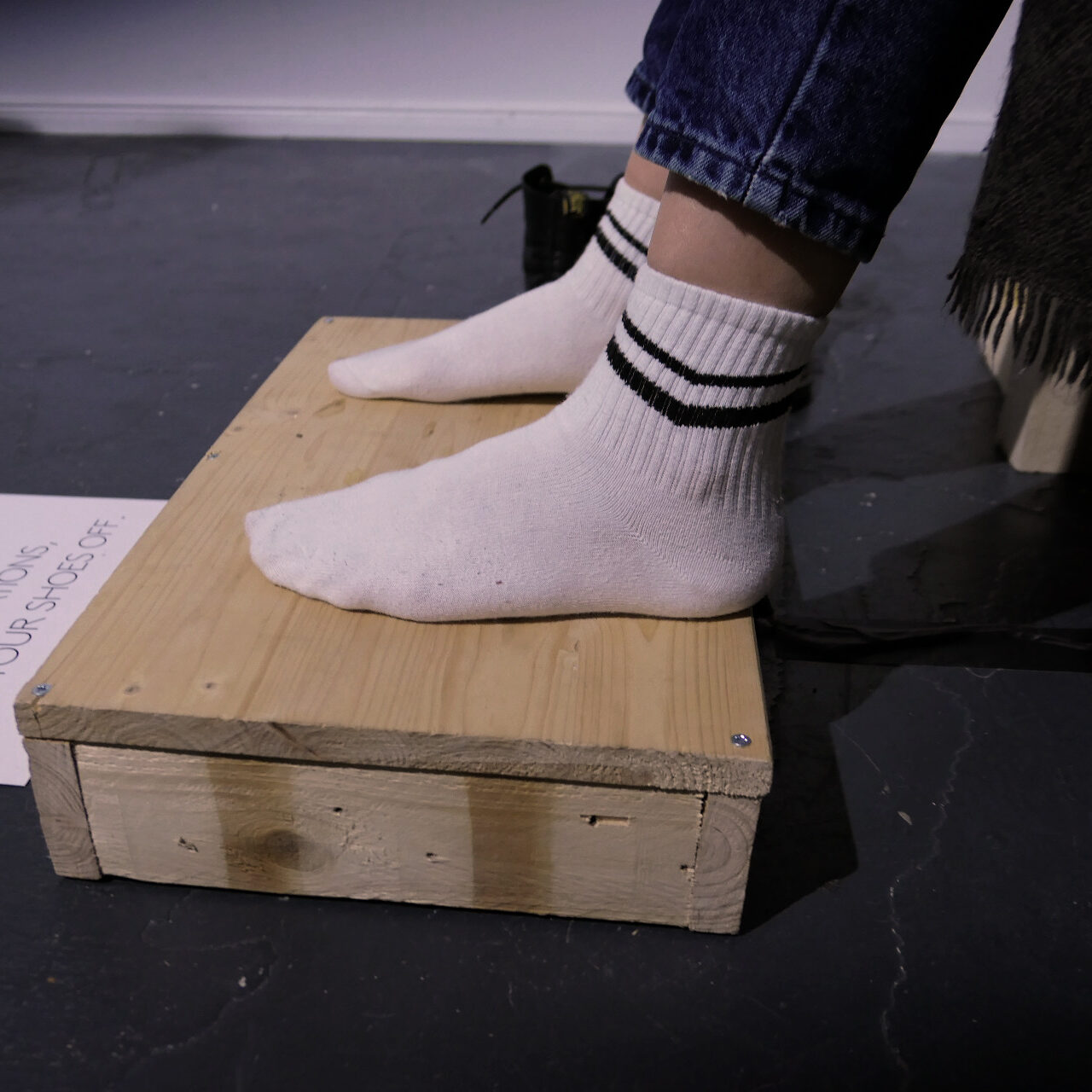
Hey bitch! invites the audience to sit down, re-appropriate their body and reflect on its place in the city.
The chair is made of recycled palette wood to integrates perfectly the urban space and transmits the deep vibrations to the listener’s body.
The soundtrack is composed of common verbal catcalling insults, such as “bitch”, “slut”, redesigned and recycled as a healing sonic massage of 3 audio channels. How does your body resonate to this? How do you reclaim your space?


Hey Bitch! was presented at the Sounds About exhibition (2022) exhibition at Zwitschermachine, Berlin and at the Against White Cubes Exhibition (2025) in Poznan.
Trash Talk (2021)
Sonic shredder against burocracy.


Trash Talk was exhibited at the Sounds About exhibition (2022) in Zwitschermachine, Berlin.